

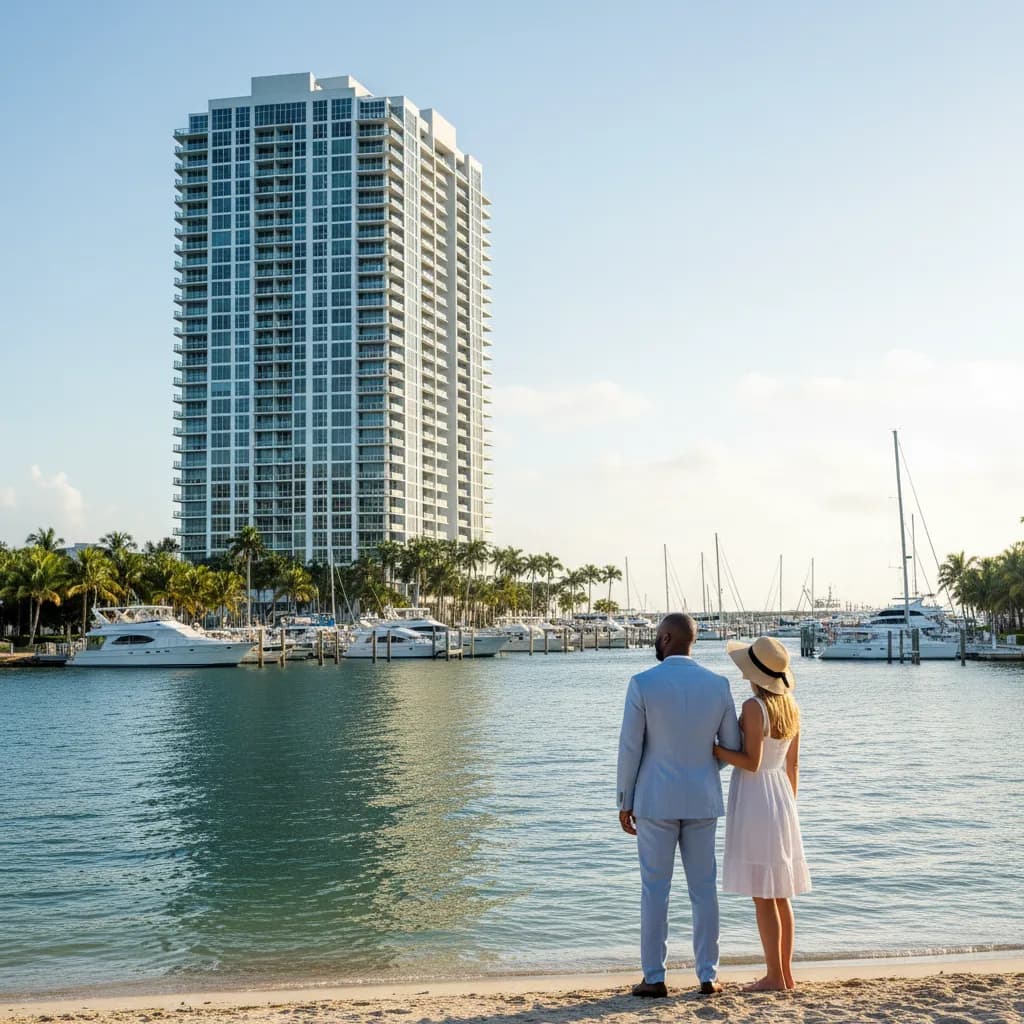
Purchasing property in Florida as a foreign national is both legally permissible and straightforward. Apart from a narrow set of restrictions under Florida's 2023 foreign ownership law (covered below), foreign nationals enjoy the same ownership privileges as U.S. citizens, regardless of visa classification or residency standing.
This guide covers acquisition procedures, financing alternatives, visa factors, taxation, and instructions for international purchasers in 2026. If you are new to the Florida buying process, our requirements to buy a house in Florida guide covers the basics.
Check Your Home Purchase Eligibility
Can Foreigners Buy Property in Florida?
Yes. International purchasers may lawfully acquire homes, condominiums, land, and investment real estate in Florida without citizenship or residency restrictions. Purchasable properties include primary residences, secondary dwellings, rental investments, commercial properties, and undeveloped land. The main exception applies to buyers domiciled in certain countries of concern, explained below.
Florida Foreign Real Estate Market Snapshot (2026)
According to the National Association of Realtors, foreign purchasers invested beyond $9 billion in Florida properties during the most recent reporting cycle. Florida maintains the leading position nationally for international acquisitions. Approximately 60% of foreign purchasers are visa holders or recent immigrants residing in Florida, while roughly 40% represent non-resident buyers acquiring from outside the state.
Key Rules for Foreigners Buying Property in Florida
- No U.S. citizenship or permanent residency requirement exists
- Taxpayer Identification Number (ITIN) acquisition necessary if lacking Social Security Number
- Financing must originate from U.S.-based lending institutions
- Most lenders mandate 20 to 25% down payment for foreign nationals
- Tax obligations generally parallel those of U.S. citizens, contingent on property utilization
For buyers from most countries, no special constraints apply to acquiring primary residences, secondary properties, or investment real estate in Florida.
Florida's Foreign Ownership Law (SB 264)
Since July 1, 2023, Florida law has restricted property purchases by certain people and entities domiciled in specific "countries of concern," including China, Russia, Iran, North Korea, Cuba, Venezuela, and Syria. The strictest rules apply to buyers domiciled in China, while buyers tied to the other listed countries face limits near military installations and critical infrastructure. In November 2025, a federal appeals court allowed the law to remain in effect.
Every buyer of Florida real estate now signs an affidavit at closing confirming they are not a prohibited buyer. Buyers from Canada, Latin America, Europe, and most other countries are not affected, but because the rules turn on domicile and property location, it is worth confirming your situation with a Florida real estate attorney before you make an offer.
Check Your Home Purchase Eligibility
Documents Foreign Buyers Need to Purchase Property
Lending institutions and title companies may request:
- Valid international passport
- Visa or entry documentation (if pertinent)
- ITIN or Social Security Number
- U.S. or foreign bank statements
- Proof of monetary resources and reserves
- Work or income verification
- U.S. or foreign tax returns (if applicable)
- Credit documentation (U.S. or international, when accessible)
Absence of U.S. credit history does not necessarily disqualify applicants from financing.
How Do Foreigners Buy a House in Florida?
Six-step acquisition process:
- Select location based on lifestyle or investment purpose — our guide to the cheapest places to buy a house in Florida can help
- Retain real estate professional experienced with international buyers
- Investigate properties through in-person or digital tours
- Research U.S. taxation, including rental income and resale regulations
- Submit proposal and negotiate conditions
- Arrange financing or remit funds in full, typically requiring 20 to 25% down payment for mortgaged purchases
Acquisition may proceed entirely remotely without Florida presence.
Financing Options for Foreign Buyers in Florida
Foreign nationals possess financing alternatives, though mortgage availability differs from U.S. resident programs. Numerous lenders provide foreign national loan arrangements that forego U.S. credit requirements, SSN prerequisites, or permanent residency mandates.
Several foreign purchasers elect cash payment, while others leverage financing to maintain liquidity, diversify portfolios, or manage currency considerations.
Foreign National Mortgage vs Cash Purchase
| Feature | Foreign National Mortgage | Cash Purchase |
|---|---|---|
| Down Payment | 25% to 40% | 100% |
| U.S. Credit Required | No | No |
| Proof of Income | Foreign income and bank statements | Not required |
| Closing Timeline | 30 to 45 days | 7 to 21 days |
| Liquidity Impact | Preserves cash | Ties up capital |
| Interest Cost | Yes | No |
| Common Use Case | Long-term ownership or investment | Speed, simplicity, leverage avoidance |
Foreign National Loan Program Comparison
| Loan Type | Down Payment | Max Loan Amount | Property Types | Best For |
|---|---|---|---|---|
| Foreign National Conventional | 25% to 30% | Up to $2 to 3M+ | Primary residence, second home, investment | Buyers with strong assets |
| Foreign National Jumbo | 30% to 40% | Above conforming loan limits | Luxury or coastal properties | High-net-worth buyers |
| Portfolio Loans | 30% to 40% | Lender-specific | Condos, non-warrantable properties | Unique or complex properties |
| DSCR (Rental Income-Based) | 30% to 35% | Based on rental income | Investment properties only | Income-producing rentals |
Terms vary by lender, property classification, and buyer circumstances.
Check Your Home Purchase Eligibility
Foreign Investment in Real Property Tax Act (FIRPTA)
FIRPTA regulations apply when international purchasers sell U.S. real property holdings, including Florida property. Purchasers commonly withhold 15% of gross transaction proceeds, forwarding it to the IRS as an advance toward the seller's probable U.S. capital gains taxation.
FIRPTA does not obstruct foreign acquisition in Florida but merits consideration for future disposition strategy. The mandatory withholding percentage may diminish or disappear through IRS certification, particularly for primary residency applications or reduced anticipated tax obligations.
Foreign purchasers regularly work with U.S. tax consultants to comprehend long-term tax consequences and compliance requirements.
Final Thoughts
Florida maintains accessibility for international property purchasers. U.S. citizenship, permanent residency, or U.S. credit history remain unnecessary for real estate ownership — though appropriate guidance proves valuable.
Methodical preparation, financing optimization, and expert collaboration enable foreign nationals to confidently acquire properties throughout Florida in 2026. Use our home affordability calculator to estimate your budget, or explore Florida grants and programs that may help reduce upfront costs.
Frequently Asked Questions
Can foreigners legally buy property in Florida?
Do foreign buyers need a U.S. visa to purchase property?
Can a foreigner get a mortgage in Florida?
How much down payment do foreign buyers need?
What taxes do foreign buyers pay in Florida?
Is an ITIN required to buy property in Florida?
Do foreign buyers need to be present at closing?
Ready to Get Started?
Check your eligibility in under 2 minutes. No credit pull, no obligation.
Get our Florida updates in your Google feed
Add Make Florida Your Home as a preferred source to see our rate, grant, and program updates more often in Google Search.