

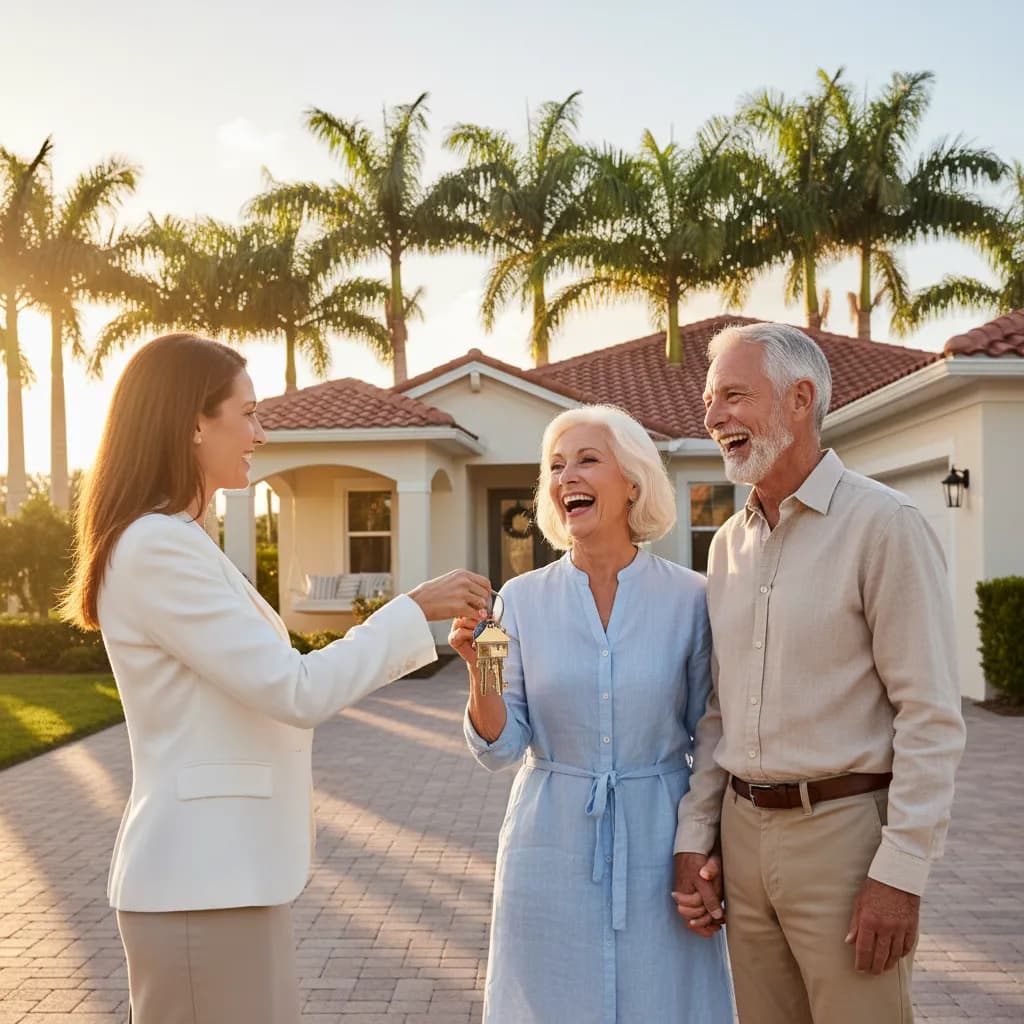
Thinking about buying a home in Florida as a senior in 2026? Good news — there are dozens of programs that can help you save big on taxes, down payments, and monthly costs.
Whether you're retiring, downsizing, or relocating, this guide covers the best statewide and local options available to seniors right now. For a complete overview of every Florida program, see our Florida first-time homebuyer grants and programs guide.
See Which Florida Senior (55+) Grants and Programs You Qualify For
How Senior Homebuyer Programs Work in Florida
Senior homebuyer programs in Florida provide financial assistance through second mortgages, forgivable loans, and reduced-interest first mortgages.
These programs are primarily managed by Florida Housing Finance Corporation and are available statewide through approved lenders.
Most options are structured to help with down payment and closing costs, offering amounts from $10,000 up to 5% of the loan total.
Some loans are deferred with 0% interest and no monthly payments, while others are forgivable after a set period — usually five years.
While some are limited to first-time buyers, seniors who are veterans or purchasing in targeted areas often qualify even if they've owned a home before.
Programs can be layered — for example, using FL Assist with an FHA loan — allowing seniors to reduce upfront costs and lock in long-term savings.
See Which Florida Senior (55+) Grants and Programs You Qualify For
Requirements for Senior Home Buyer Grants & Programs
To qualify for most senior homebuyer programs in Florida, you'll typically need to meet a few basic requirements.
First, be 55 or older (for senior-specific options), plan to use the home as your primary residence, meet income and purchase price limits, and complete a HUD-approved homebuyer education course.
Some programs may also require a minimum credit score (usually 620–640), a small personal contribution, or first-time homebuyer status — though seniors, especially veterans, may be exempt from that rule.
See Which Florida Senior (55+) Grants and Programs You Qualify For
10 Best Florida Homebuyer Grants and Programs for Seniors
HECM for Purchase — Buy a Home with No Monthly Mortgage
Financial Aid Amount: Covers up to 50–70% of your new home's purchase price — with no monthly mortgage payments
Best For: Seniors 62+ looking to downsize or relocate without monthly housing debt
What It Is (And Isn't)
- This is not a traditional mortgage — it's a special loan just for seniors to help buy a home, not borrow against one you already own
- You pay about 40–50% of the home's price up front, and the rest is covered by the loan — no monthly payments required
- You stay on the title, keep full use of the home, and the loan is only repaid when you move out, sell, or pass away — learn more about reverse mortgage closing costs in Florida
Why It's Great for Seniors
- Buy your forever home without the stress of a monthly mortgage
- Use proceeds from selling your old home to cover the down payment — and keep the rest for retirement
- Perfect for relocating closer to family, downsizing, or moving into a one-story home
Simple Requirements
- One borrower must be age 62 or older
- The home must be your primary residence
- You'll need to cover about half the purchase price with your own funds (like from a previous home sale)
- Complete a one-time counseling session to understand the program
Florida Hometown Heroes Housing Program
Financial Aid Amount: Up to $35,000 in down payment and closing cost assistance with 0% interest
Best For: Seniors who are veterans or still working in Florida and need help with upfront home costs
Why It's Great for Seniors
- Veterans are eligible even if they've owned a home before — no need to be a first-time buyer
- Zero-interest, no-payment loan helps cover big upfront costs like your down payment and closing fees
- No monthly payments on the assistance loan unless you sell, refinance, or move
Program Benefits
- Receive up to 5% of your first mortgage loan amount (max $35,000)
- 0% interest, deferred second mortgage — no monthly payments
- Reduced mortgage insurance and no origination fee on the first mortgage
Basic Requirements
- Veterans qualify automatically (and may also benefit from VA disability property tax exemptions) — all others must be first-time buyers and work full-time in Florida
- Minimum credit score of 640 (660 for certain loans)
- Must meet income limits and purchase a primary residence in Florida
Florida Assist Second Mortgage
Financial Aid Amount: $10,000 interest-free loan for down payment and closing costs
Best For: Seniors who want to reduce upfront homebuying costs without taking on new monthly bills
Why It's Great for Seniors
- It's a 0% loan with no monthly payments — you don't repay until you sell, move, or refinance
- Perfect for seniors with limited cash who want help without extra financial strain
- Lets you keep more savings on hand for retirement, medical needs, or emergencies
Program Benefits
- Provides $10,000 toward your down payment or closing costs
- No interest and no monthly payments — ever
- Only repaid when you sell, refinance, or stop living in the home
Basic Requirements
- Must be paired with a Florida Housing first mortgage (like Hometown Heroes or FHA)
- Must use the home as your primary residence
- Standard income and credit requirements apply (typically 640+ FICO)
Florida PLUS TBA Loan Program
Financial Aid Amount: Up to 5% of your mortgage amount (max $25,000) toward down payment and closing costs
Best For: Seniors who plan to stay in their new home long-term and want assistance they don't have to repay
Why It's Great for Seniors
- Offers forgivable assistance — if you stay in the home 5 years, you never have to pay it back
- No monthly payments or interest to worry about
- Great choice for retirees planning to age in place
Program Benefits
- Provides up to 5% of your first mortgage amount as assistance
- 0% interest, no monthly payments, fully forgivable after 5 years
- Can be used with FHA, VA, USDA, and conventional loans
Basic Requirements
- Must use a participating Florida Housing first mortgage
- Must live in the home as your primary residence
- Meet income and credit score guidelines (minimum 640–660 FICO)
Florida VA Home Loan
Financial Aid Amount: Up to 100% financing — no down payment or mortgage insurance required
Best For: Senior veterans looking to buy with zero down and low monthly costs
Why It's Great for Seniors
- Eliminates the need for a down payment — ideal for seniors with fixed incomes
- No monthly mortgage insurance, keeping payments lower for life
- Lenient credit and income guidelines make it accessible for retired buyers
Program Benefits
- Zero down payment required
- No private mortgage insurance (PMI)
- Competitive fixed interest rates backed by the VA
- Reusable benefit — you can use it again even if you've bought before
Basic Requirements
- Must be a U.S. military veteran, active duty, or eligible surviving spouse
- Must use the home as your primary residence
- Must meet VA service and discharge requirements
- Minimum credit score typically around 620
Florida FHA Loan Program
Financial Aid Amount: Up to 96.5% financing — only 3.5% down required
Best For: Seniors with limited savings or lower credit scores who need an easy path to homeownership
Why It's Great for Seniors
- Low 3.5% down payment makes it easier to buy without draining savings
- More forgiving on credit — ideal for seniors with less-than-perfect histories
- Can pair with Florida down payment programs like FL Assist or PLUS
Program Benefits
- Only 3.5% down required (can be gifted or covered by assistance)
- Allows credit scores as low as 580
- Competitive fixed rates and predictable payments
- Available statewide with many lender options
Basic Requirements
- Must use the home as your primary residence
- Minimum credit score of 580 (640+ preferred for pairing with assistance)
- Must meet FHA loan limits and debt-to-income guidelines
Florida Bond Loan Program
Financial Aid Amount: Varies — typically combined with second mortgage options for down payment help
Best For: Seniors who want multiple loan options and flexibility with how their assistance is structured
Why It's Great for Seniors
- Offers multiple loan types to fit your specific needs — FHA, VA, USDA, or conventional
- Pairs with down payment assistance, so you get the help you need in one bundled loan
- Ideal if you're not sure which program to choose — Bond loans are widely accepted and senior-friendly
Program Benefits
- Compatible with most Florida Housing assistance programs (FL Assist, PLUS, etc.)
- Access to fixed-rate 30-year loans with reduced mortgage insurance
- Available statewide through approved lenders
Basic Requirements
- Must be a first-time buyer (unless veteran or buying in a targeted area)
- Must live in the home as your primary residence
- Meet income, purchase price, and credit guidelines (usually 640+ FICO)
USDA Loan (Florida Eligible Areas)
Financial Aid Amount: 100% financing with no down payment for homes in USDA-approved areas
Best For: Seniors looking to buy in rural or suburban areas without using savings for a down payment
Why It's Great for Seniors
- No down payment means you can buy a home without liquidating retirement assets
- Lower monthly costs than FHA loans due to reduced mortgage insurance
- Ideal for peaceful, low-cost living in rural and small-town Florida
Program Benefits
- 100% financing available — no money down required
- Reduced monthly mortgage insurance costs
- Fixed interest rates and flexible underwriting guidelines
Basic Requirements
- Home must be in a USDA-eligible rural or suburban area
- Household income must fall within USDA limits for the area
- Must use the home as your primary residence
- Credit score of 640+ generally required for streamlined approval
HomeReady Loan Program
Financial Aid Amount: Up to 97% financing with just 3% down, plus reduced PMI costs
Best For: Seniors with fixed income sources like Social Security, pensions, or annuities
Why It's Great for Seniors
- Allows nontraditional income like retirement or boarder income to qualify
- Only 3% down payment required, which can be gifted
- Lower mortgage insurance costs keep monthly payments affordable
Program Benefits
- Just 3% down and up to 97% financing
- Reduced private mortgage insurance (PMI)
- Flexible income sources accepted, including household contributors
- Can be combined with Florida assistance programs like FL Assist
Basic Requirements
- Must use the home as your primary residence
- Income must fall below 80% of area median income (AMI)
- Minimum credit score of 620
- Completion of a one-time homebuyer education course required
HFA Preferred Plus Program
Financial Aid Amount: Up to 5% of your loan amount — fully forgivable after 5 years
Best For: Seniors who want simple, forgivable down payment help tied to a low-rate mortgage
Why It's Great for Seniors
- Provides upfront assistance that doesn't need to be repaid if you stay in the home 5 years
- No monthly payments on the assistance loan
- Pairs with a stable 30-year fixed mortgage for predictable retirement budgeting
Program Benefits
- Up to 5% of the loan amount provided as a second mortgage
- 0% interest and fully forgivable after 5 years
- Used in combination with a preferred conventional loan
- Available statewide through approved lenders
Basic Requirements
- Must use a participating Florida Housing conventional first mortgage
- Minimum credit score of 640–660 depending on the property
- Home must be your primary residence
- Income and purchase price limits apply
Your Next Steps to Get Started With Florida's Senior Homebuyer Help
The first step is to see which Florida senior (55+) grants and programs you qualify for.
Click our eligibility check tool to get matched with the right options based on your age, income, and credit score. It only takes a minute and helps you find programs like forgivable loans, zero-down options, or help with closing costs.
Next, choose the program that fits your needs best. Some are designed for veterans, some for buyers with limited savings, and others are fully forgivable after a few years.
After that, a Florida Housing-approved lender will guide you through getting pre-approved and applying for the program.
You'll also complete a short homebuyer education course — this is required for most programs and can be done online.
Once that's finished, your assistance is applied when you close on your home, helping you save thousands and keep more money in retirement. Seniors should also look into Florida property tax exemptions for seniors to further reduce long-term housing costs.
See Which Florida Senior (55+) Grants and Programs You Qualify For
Frequently Asked Questions
Are there homebuyer programs for seniors in Florida?
Can seniors get help with down payments in Florida?
What home loans are available for seniors on fixed income?
Do first-time homebuyer programs in Florida work for seniors?
Do seniors qualify for Hometown Heroes in Florida?
What is the HECM for Purchase program?
Are there grants for seniors buying a home in Florida?
How does a reverse mortgage for purchase work in Florida?
Can retirees use Florida down payment assistance programs?
What mortgage options are best for seniors in Florida?
Ready to Get Started?
Check your eligibility in under 2 minutes. No credit pull, no obligation.
Get our Florida updates in your Google feed
Add Make Florida Your Home as a preferred source to see our rate, grant, and program updates more often in Google Search.