The Phil Ganz Mortgage Library
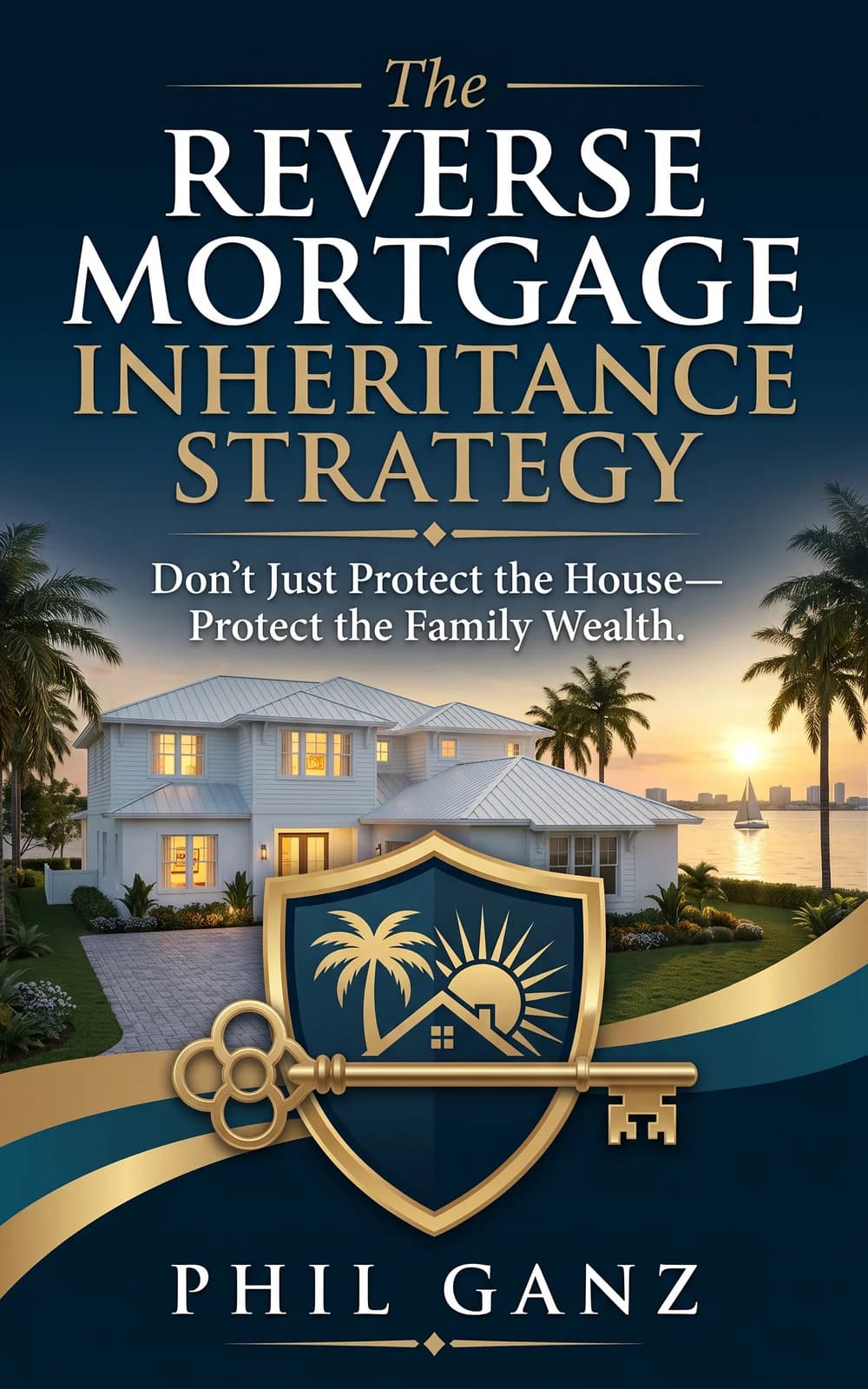
The Reverse Mortgage Inheritance Strategy
Don't Just Protect the House, Protect the Family Wealth. The adult child's guide to a parent's reverse mortgage.

Written by Phil Ganz, Mortgage Expert · NMLS #37833
Published September 6, 2026 · Page updated September 9, 2026
Also on Apple Books, Kobo, and more. See every retailer.
Rules described in the book follow the FHA Home Equity Conversion Mortgage (HECM) program as administered by HUD, which applies nationwide.
Who This Book Is For
The people who will live with the decision
The borrower signs the loan. Everyone below inherits its consequences. The book is addressed to them.
- Adult children whose parent is considering, or already has, a reverse mortgage
- Homeowners 62 and older who want their family to understand the decision
- Heirs who have just received the due-and-payable letter
- Siblings trying to agree on whether to keep or sell the family home
- Families weighing a reverse mortgage against a HELOC, selling, or downsizing
- A spouse under 62 who is not on the loan
- Realtors working with older sellers and their families
- Financial planners, CPAs, and estate professionals advising clients with home equity
Inside the Book
Most families treat a reverse mortgage as a last resort. Used properly, it is one of the most powerful financial tools your parents own. Somebody in your family has raised the idea, which makes it your decision as much as theirs, and you are being asked what you think before anyone has told you how it actually works.
This book is written for you, not for them. Your parents' house is the largest asset they hold and the only one earning nothing. It does not compound and it pays no dividend. It sits on a street doing nothing while every other asset in the family works. A reverse mortgage is the instrument that puts it to work, and used at the right time it can fund their retirement, keep your own money where it belongs, and leave more behind rather than less.
Most families never get that far, because they answer the wrong question. They ask whether a reverse mortgage is good or bad. The real question is quieter: whose money pays for your parents' next ten years, theirs or yours?
“Used deliberately, the house pays for what is coming. Ignored, it gets spent anyway, and nobody chose it.”
What Readers Will Learn
Sixteen Chapters, in the Order the Questions Come
The book follows the sequence a family actually goes through, from the first phone call to the day the loan comes due. Every chapter ends with what it means for your family.
- CHAPTER 01
Mom Said She's Considering a Reverse Mortgage
Why the adult child ends up holding this decision, and the one question to answer before anything else.
- CHAPTER 02
What a Reverse Mortgage Really Is
The HECM, the age 62 rule, HUD counseling, and how the amount a borrower can access is actually calculated.
- CHAPTER 03
Does the Bank Own Mom's House?
No. Title stays with the borrower. Where the fear came from, and the harder concern underneath it.
- CHAPTER 04
What Happens to Our Inheritance?
The non-recourse guarantee, the 95 percent rule for an underwater house, and the arithmetic of what is left.
- CHAPTER 05
What Happens When Mom or Dad Dies?
The servicer's notification clock, the 30-day letter, the six-month deadline, and the two 90-day extensions.
- CHAPTER 06
What Happens If They Need Assisted Living?
The principal residence requirement and its single exception: twelve consecutive months in a health care institution.
- CHAPTER 07
Taxes, Insurance and Maintenance: What Never Goes Away
The loan removes the mortgage payment and nothing else. The four obligations that put a loan in default.
- CHAPTER 08
How Much Does a Reverse Mortgage Really Cost?
Line by line through a real closing statement: the origination fee cap, the 2 percent upfront premium, the 0.50 percent annual premium.
- CHAPTER 09
HECM vs HELOC vs Selling vs Downsizing
The same house, four ways to get money out of it, compared on cost, risk, and who ends up holding the bill.
- CHAPTER 10
Protecting a Non-Borrowing Spouse
The narrow, conditional protection for a spouse under 62, and why it only works if the paperwork was right at closing.
- CHAPTER 11
The Reverse Mortgage Line of Credit
The unused line grows every month, compounding at the loan's own rate, whether or not anybody touches it.
- CHAPTER 12
Five Times I Would NOT Recommend One
A short expected stay, obligations they cannot carry, a resident who cannot be protected, a cheaper path, and someone else driving the decision.
- CHAPTER 13
Questions Every Adult Child Should Ask the Loan Officer
The specific questions, and the answers that should end the conversation.
- CHAPTER 14
The Family Meeting
How to have the conversation with siblings and parents so that nobody is surprised later.
- CHAPTER 15
What Happens After Closing
Annual occupancy certifications, servicer statements, and the paperwork heirs will need to find.
- CHAPTER 16
What Heirs Need to Do When the Loan Becomes Due
The step-by-step for the estate: respond in writing, get the appraisal, choose between keep, sell, and deed-in-lieu.
Free Resources That Go With the Book
The book is national. These guides and tools cover the Florida specifics and the next step, and they are free with or without it.
Check Reverse Mortgage Eligibility
See whether a Florida reverse mortgage or HECM option fits. Two minutes, no credit pull.
Reverse Mortgage Closing Costs in Florida
Every fee on a Florida HECM closing statement, including doc stamps and how costs are paid.
How a HELOC Works in Florida
The conventional alternative the book compares against, with Florida-specific rules.
Florida Property Tax Exemptions for Seniors
The tax bill is one of the four obligations that never goes away. These exemptions lower it.
Florida Senior Homebuyer Grants & Programs
Programs for older homeowners and buyers that can change the downsizing math.
Talk With Phil's Team
Bring the questions from Chapter 13. A licensed loan officer will answer them.

4.9 ★ · 100+ Google Reviews
NMLS #37833 · Verify on NMLS Consumer Access
About the Author
Phil Ganz, Author of The Reverse Mortgage Inheritance Strategy
Mortgage Expert · NMLS #37833 · President, Next Wave Mortgage
Why I Wrote This Book
“I have been doing this for 26 years. In that time I have talked more people out of this loan than I have put into it, and the ones I talked out of it are the reason I am willing to advocate for it anywhere else in this book. A product that is right for everyone is a product nobody should trust.”
Phil Ganz is a nationally ranked top 1% mortgage originator and President of Next Wave Mortgage (NMLS #2536820), the Fort Lauderdale-based lender behind MakeFloridaYourHome.com. Over 26+ years in the mortgage industry he has helped thousands of families through the biggest financial decision of their lives.
He wrote The Reverse Mortgage Inheritance Strategy because the adult children of his clients kept asking the same questions, usually after the decision had already been made. The book answers them in order, with the arithmetic shown, and includes the chapter he considers the most important one: the five situations where he would not recommend the loan at all.
Phil holds individual NMLS license #37833 and specializes in home financing for Florida families, including reverse mortgages, first-time buyers, and down payment assistance.
Read Phil's full profileChoose Your Edition
Same book in every format. More retailers below.
Kindle eBook
Instant delivery. Read on any device.
Buy on AmazonPaperback
The everyday print edition. 189 pages.
Buy on AmazonHardcover
Durable and gift-ready.
Buy on AmazonGoogle Play Books
Free to read on Google Play.
Read on Google PlayPublication Details
The Reverse Mortgage Inheritance Strategy: Don't Just Protect the House, Protect the Family Wealth · Published September 6, 2026 · Author: Phil Ganz · Publisher: Phil Ganz · 189 pages
Paperback ISBN 979-8172370588 · Hardcover ISBN 979-8172404962 · eBook ISBN 979-8233841170 · Google Books record
Where to Buy
The Reverse Mortgage Inheritance Strategy is stocked wherever you already buy books. Every link opens the retailer in a new tab.
Buy the Book




Read or Discover on Other Platforms





More retailers are added as each one lists the title.
Also by Phil Ganz
More from the Mortgage Library
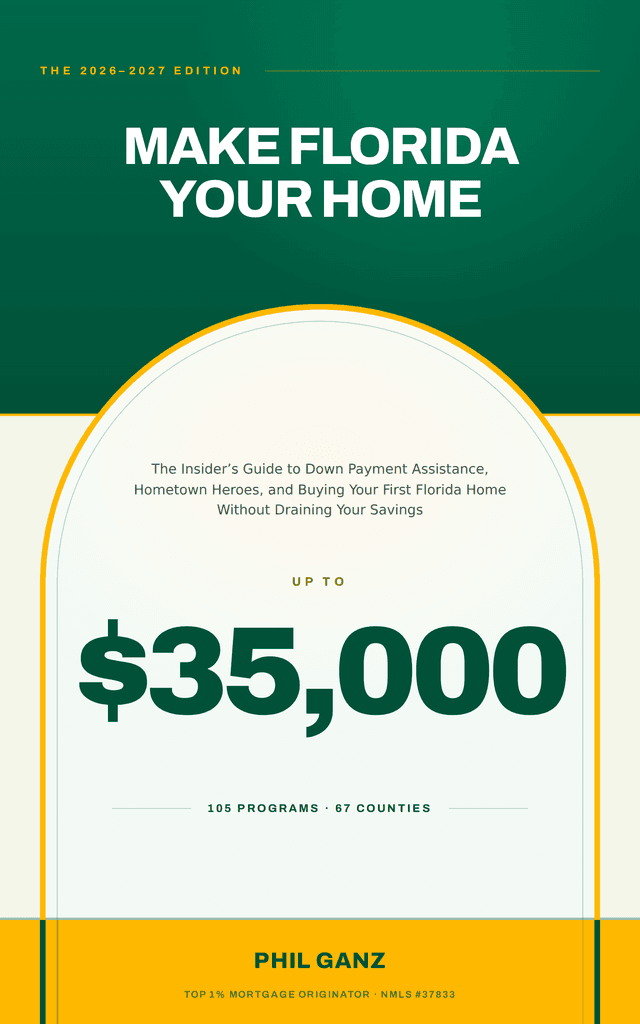
Make Florida Your Home
For Florida buyers who want to understand grants, down payment assistance, and first-time homebuyer programs.

APPROVED
For buyers who were told no, or expect to be. 48 real questions about FHA loans, down payment help, co-signers, and the programs your bank may never mention.
Reverse Mortgage Questions Families Ask
Short answers to the questions the book answers in full. The rules below follow the federal HECM program and apply nationwide.
Talk to an ExpertThe loan becomes due and payable. The servicer has 60 days to notify HUD and then 30 days to notify the estate or heirs. The letter gives the family 30 days to state, in writing, what they intend to do: keep the house by paying off the balance, sell it, or hand it back. It is 30 days to state an intention, not 30 days to close a sale. The servicer must take the first legal step toward foreclosure no later than six months from the start of its clock, and HUD allows up to two 90-day extensions when the family is actively working toward a sale or payoff, so twelve months is the outside edge of the family's time.
No, but it changes what the inheritance is. The house is still part of the estate. What heirs inherit is the equity left after the loan balance is paid, and that balance grows every month because interest and mortgage insurance are added to it rather than paid. Whether anything is left depends on the home's value, how long the loan ran, and how much was drawn. The book walks through how to estimate that number on any given date.
Yes. Title passes through the estate the same way it would without the loan. The difference is that the lender's lien must be satisfied. Heirs who want to keep the house pay off the balance, typically with a new mortgage or cash. Heirs who do not want it can sell, or sign a deed in lieu of foreclosure and walk away with no personal liability.
Yes, and they have a specific advantage when the loan balance exceeds the home's value. Under the 95 percent rule, the estate or heirs may satisfy the loan by paying the lesser of the full balance or 95 percent of the current appraised value. If the house is worth more than the balance, heirs simply pay the balance, usually by refinancing into a conventional mortgage in their own names.
No. The Consumer Financial Protection Bureau's answer is that title to the home remains with the borrower. In fact, holding title in your own name or living trust is a condition of getting the loan at all. The lender holds a lien, the same way any mortgage lender does. The borrower can sell, refinance, or leave the house to heirs at any time, subject to paying the loan off.
The HECM is non-recourse and insured by FHA. Neither the borrower nor the heirs ever owe more than the home is worth, and the lender cannot come after other assets or the estate for the shortfall. The estate or heirs can sell the house for at least 95 percent of appraised value and the FHA insurance fund absorbs the rest, or they can deed the house to the lender and owe nothing.
Practically, six months from the servicer's clock, with up to two 90-day extensions for a total of twelve months. The extensions are not automatic. The family has to show it is actively listing the property or arranging a payoff. The book's Chapter 16 is a working checklist for using that time well.
The largest items are the FHA upfront mortgage insurance premium of 2 percent of the home's maximum claim amount (the appraised value, capped at the HECM lending limit), an origination fee that is capped at $6,000 and can be negotiated lower, third-party closing costs, and an annual mortgage insurance premium of 0.50 percent of the outstanding balance that accrues onto the loan rather than being billed. In the worked example in the book, putting the loan on a $480,000 house costs roughly $19,000, which is why the loan rewards a long stay and punishes a short one.
No. The HECM is a federal program and the rules in the book apply nationwide. The book is written for any family in the United States. Florida-specific details, like documentary stamp taxes on the closing statement, are covered separately on this site.
The content is identical across editions. The paperback and hardcover are on Amazon. The ebook is on Apple Books, Kobo, Google Play Books, and the other retailers listed on this page, and the Google Play edition is free.
Bring the Questions From Chapter 13
A licensed loan officer will walk your family through the numbers for your parents' house. No credit pull, no obligation.