Condotel Loans in Florida
Found the perfect unit in a beachfront resort or an Orlando condo-hotel, only to hear that conventional and FHA loans won't touch it? Condotel loans are built for exactly these buildings. Finance a condo-hotel unit as a second home or an investment.
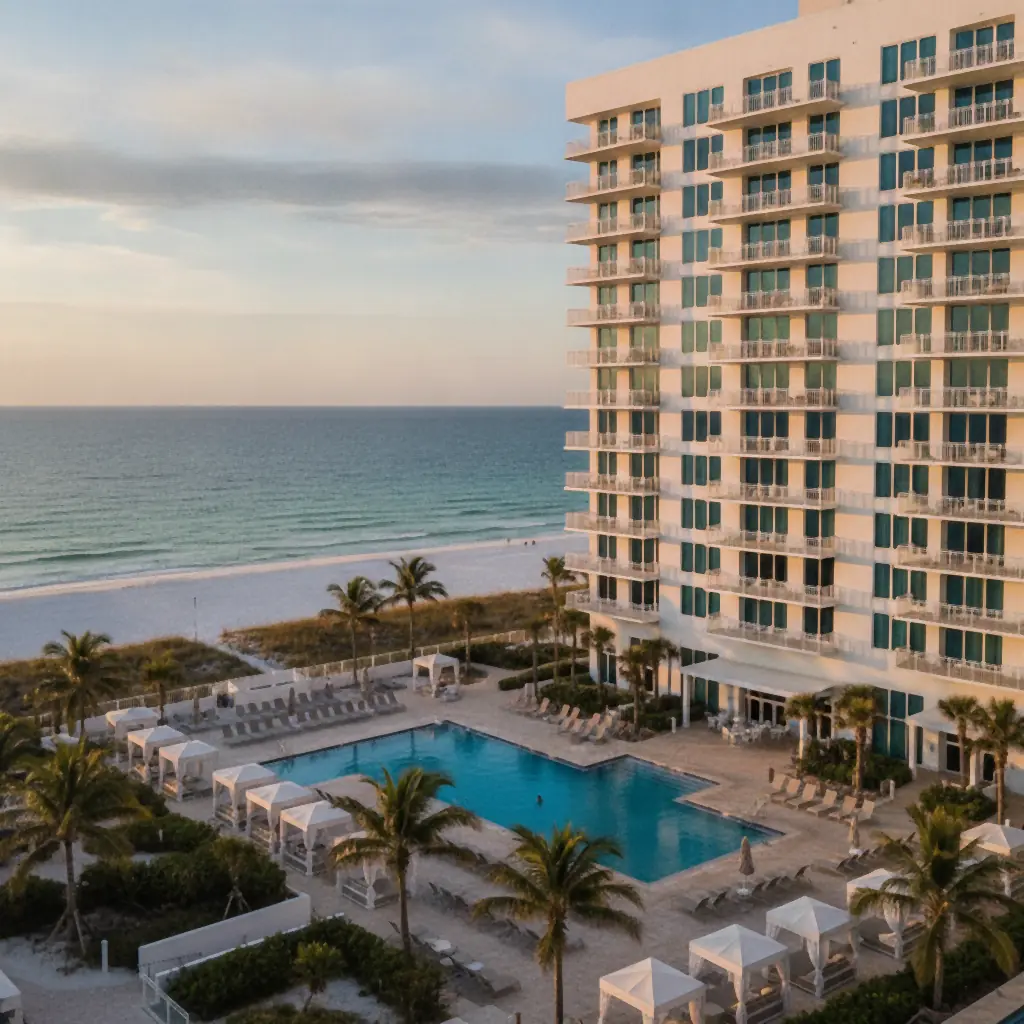

Condotel Loan at a Glance
A condotel is a condominium building that operates like a hotel. You own your unit, but the building may have a front desk, a rental program, and daily housekeeping. Those hotel features are what make condotel financing different.
| Feature | Typical Terms |
|---|---|
| Down Payment | Usually 25%–40%; second-home use often starts near 25%, investment use is commonly 30%–40% |
| Credit Score | Often 680 or higher, depending on the program |
| Loan Type | Portfolio or non-QM financing — condotels don't qualify for conventional or FHA loans |
| Unit Size | Many programs set a minimum size (often 400–600 sq. ft.) and prefer a full kitchen |
| Occupancy | Second home or investment property — not a primary residence |
| Qualifying Income | Your personal income, or the unit's rental history with some DSCR programs |
| Reserves | Commonly 6–12 months of payments after closing |
| Vesting | Your own name or an LLC (program-dependent) |
Condotel vs. Regular Condo
Fannie Mae, Freddie Mac, and FHA treat hotel-style buildings as ineligible. Here's what typically separates a condotel from a condo you could finance with a standard loan.
| Feature | Condotel | Regular Condo |
|---|---|---|
| Front desk & check-in | Yes — like a hotel | No |
| Rental program | On-site program that rents units nightly, often sharing revenue | Owners rent on their own, if the association allows it |
| Daily housekeeping | Common | No |
| Owner use | May be limited by the rental program's rules | Unrestricted |
| Conventional & FHA financing | Not eligible | Eligible if the building meets agency standards |
| Financing you'll use | Condotel (portfolio or non-QM) loan | Conventional, FHA, VA, or other standard loans |
What Lenders Look At
The Unit Itself
Square footage and a working kitchen matter. Small hotel-room-style units without kitchens are the hardest to finance.
The Rental Program
Lenders review whether renting through the hotel program is mandatory, how revenue is split, and how much personal use you keep.
The Building's Finances
Reserves, insurance, and pending special assessments all count — especially for Florida buildings working through new condo safety requirements.
Your Down Payment & Credit
A larger down payment and a stronger credit score open more programs and better pricing, and reserves after closing are usually required.
What's Different in Florida
Florida has more condo-hotels than almost anywhere — from Orlando near the theme parks to Miami Beach, Fort Lauderdale, Clearwater, Destin, and Panama City Beach. These Florida factors affect both your loan and your returns.
| Florida Factor | What It Means for You |
|---|---|
| Condo safety laws | Florida's post-Surfside laws require structural inspections and fully funded reserves for many condo buildings, including condotels. Ask about recent inspections and any planned special assessments before you buy. |
| Transient rental taxes | Rentals of six months or less owe Florida sales tax plus county surtax and tourist development tax. Hotel rental programs usually collect and remit them — confirm who handles it. |
| Insurance & hurricane season | The building's master wind policy flows into your association dues, and storm season can affect rental income. Lenders count both. |
| No homestead exemption | Condotels are second homes or investments, so expect full, non-homestead property taxes. |
| Seasonal income | Florida resort revenue swings with the seasons. Ask the rental program for 12–24 months of owner statements to see a full year of income. |
Estimate Your Unit's Cash Flow
Our free Florida DSCR calculator includes a short-term rental mode, county-level property taxes, and realistic Florida insurance — a quick way to see whether a condotel unit's rental income covers the payment.
Try the Florida DSCR CalculatorHow to Get a Condotel Loan
- 1
Check the Building First
Send us the building name before you make an offer. Some condotel projects are financeable and some aren't, and knowing early saves your deposit and your time.
- 2
Gather the Rental Program Details
Get the rental program agreement, recent owner statements, and the association's budget. Lenders use them to review the building and your income.
- 3
Choose Your Program
We'll match you with a second-home, investment, or DSCR condotel program based on how you plan to use the unit and your down payment.
- 4
Appraisal & Closing
The appraisal confirms the unit's value against similar condotel sales. Then you close — in person, by mail, or in your LLC if the program allows.
Related Guides
DSCR Loans in Florida
Qualify on rental income instead of your personal income — no tax returns required.
Read Guide
Foreign National Mortgages in Florida
How non-residents finance Florida vacation homes and rentals without U.S. credit.
Read Guide
Florida DSCR Loan Calculator
County-level property taxes, Florida insurance estimates, and Airbnb mode.
Read Guide
Conventional Mortgages in Florida (2026)
How conventional loans work — and why their condo rules exclude hotel-style buildings.
Read GuideFrequently Asked Questions
Quick answers to the questions Florida homebuyers ask us most. Can’t find what you’re looking for?
Talk to an ExpertA condotel (or condo-hotel) is a condominium building that operates like a hotel. Each unit is individually owned, but the building typically has a front desk, a rental program that books units to nightly guests, and services like housekeeping. Owners can often use their unit part of the year and earn rental income the rest of the time.
Yes, but not with a conventional or FHA loan. Fannie Mae, Freddie Mac, and FHA consider hotel-style buildings ineligible, so condotel units are financed with portfolio or non-QM loans from lenders who keep the loans on their own books. Not every condotel building qualifies, so it's best to check the specific project before you make an offer.
Plan on 25% to 40% down. Programs for second-home use often start near 25%, while investment-property programs commonly require 30% to 40%. The building, the unit's size, and your credit score can all move that number.
Usually, yes — within the rental program's rules. Many programs let owners block out personal stays, while some limit owner use during peak season or require units to stay in the rental pool. Lenders look at these rules too, because programs that strip away owner use can be harder to finance.
It depends on the program. Some condotel loans qualify you on your personal income, like a standard mortgage. Others — including certain DSCR programs — can use the unit's rental history, usually documented with 12 to 24 months of statements from the rental program.
Often, yes. Condotels are popular with international buyers who want a Florida vacation home that earns income while they're away. Foreign national condotel financing is available from select programs, typically with a larger down payment and reserves held in a U.S. account.
Find Out If Your Condotel Unit Can Be Financed
Send us the building and your plans for the unit — we'll tell you which programs fit, with no obligation.